

As the weather turns cold, does your skin also start to “act up”? Dryness, flaking, red rashes, itching so bad you can't sleep... Winter is simply the "high season" for dermatitis and eczema! What to do when it recurs? How to choose ointments? Should steroids be used? Don't panic! We have compiled a practical guide from authoritative dermatology experts to help you scientifically address winter skin problems.
The following four types of people are most prone to skin "problems" in winter:
Middle-aged and elderly individuals: As age increases, the functions of various organs in middle-aged and older adults gradually decline. The skin, as the body's largest organ, also undergoes an aging process, manifested by decreased skin barrier function and appendage function, making them more susceptible to various skin problems.
People who sweat a lot: If sweating heavily frequently, the skin surface remains in a moist state for prolonged periods. Persistent stimulation from sweat can induce eczema, leading to symptoms such as erythema, papules, and itching.
People with allergic constitutions: Those with allergic constitutions are more likely to develop allergic dermatitis or eczema when exposed to allergens such as dust, pollen, and willow catkins. This type of skin condition often presents as skin erythema, small bumps, accompanied by noticeable itching, and in severe cases, swelling or small blisters may appear.
People who frequently do housework: Frequent contact with detergents containing irritating ingredients like hand soap, dishwashing liquid, and laundry detergent requires vigilance for hand eczema. This condition often occurs on the back of fingers, the palmar side of fingertips, and the back of the hands. It mostly presents in a subacute or chronic form, commonly appearing as small, ill-defined crusted patches, often accompanied by blisters on the surface.
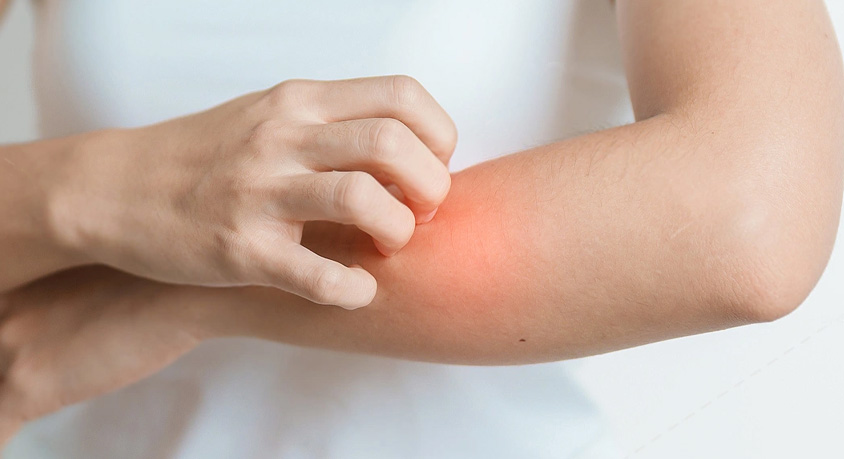
Apart from medication treatment, patients should also pay attention to the following three key care points in daily life:
Gentle cleansing: It is recommended to choose weakly acidic, low-irritant, hypoallergenic cleansing products with a pH value close to 6, and cleanse once daily or every other day.
Enhance moisturizing: Moisturizing is crucial for repairing the skin barrier. It is recommended to choose functional skincare products that are safe based on experimental and clinical validation. It is suggested to leave a half-hour interval between applying skincare products and medication.
Strict sun protection: Sun protection is still necessary in winter, ideally combining physical sun protection with applying sunscreen. Sunscreen products should be reasonably chosen based on individual skin type, climate, and sun exposure to avoid sunburn.
In summary, standardized treatment and scientific care complement each other. Only by combining both can we help the skin overcome troubles and maintain long-term stability and health!
Friendly reminder: This article is for health science popularization only and does not constitute medical advice. If you have skin problems, please seek medical attention promptly and use medication as directed by a doctor.

