

In life, we always have some elderly people around us who, despite their gray hair, remain energetic and walk with light steps. In fact, to judge whether a person is truly "aging," we cannot just look at external wrinkles and age numbers. The five key "longevity abilities" demonstrated by the body are a more objective "aging scale."
The stronger these "longevity abilities" are, the longer the healthy lifespan and the lower the disease risk often are. If you find none of these are particularly strong in yourself—don't panic, start exercising now!
The stronger these five abilities of the body, the greater the possibility of longevity:
1. Chewing ability. It's not just about eating: In September 2025, a study published in the Journal of Dental Research found that stronger chewing function is associated with a lower risk of all-cause mortality, especially in the elderly.
The study included nearly 5,000 elderly individuals with an average age of 72.8, categorizing their chewing function into six levels: from being able to chew the hardest foods (Level 1) to being unable to chew soft foods (Level 6). The study found:
For each level decrease in chewing function, the mortality risk increased by 9%;
People with chewing difficulties had a 25% higher mortality risk;
Maintaining optimal chewing function increased the 6-year survival rate by 3%.
Why is chewing ability so important? Chewing force is the combined power generated by the oral and facial muscles during chewing, relying on the coordinated action of teeth, jawbones, muscle groups, the temporomandibular joint, and nerves. Although the chewing action is confined to the mouth, it can transmit health benefits throughout the body via the nervous, endocrine, and other systems, building a comprehensive anti-aging defense.
2. Hand grip strength. Strong grip, long life: Grip strength is far more than just hand strength; it is an important indicator of overall muscle strength, especially the health of upper limb muscle groups. A 2024 study published in a JAMA sub-journal found that weak grip strength is often associated with low overall muscle mass, and such elderly individuals have a significantly higher 10-year mortality risk.
A simple reference standard is: Normal adult grip strength should be ≥28 kg for men and ≥18 kg for women.
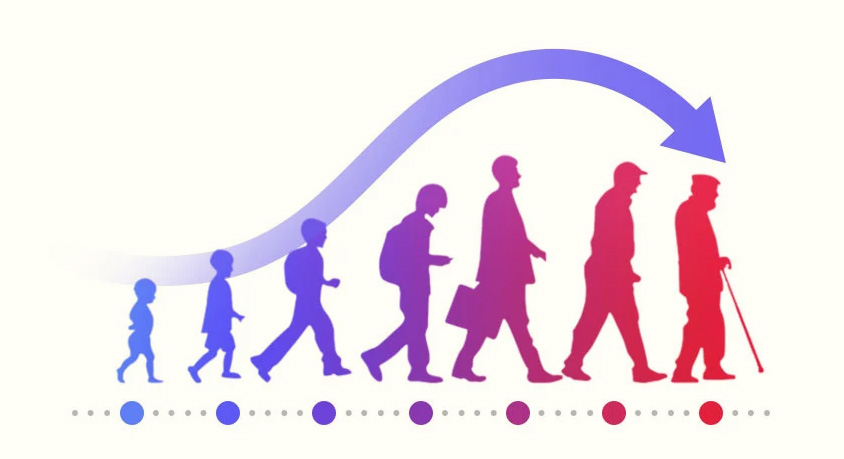
3. Walking speed: Walking fast means aging slowly. Walking speed is a comprehensive indicator reflecting the health status of the elderly, reflecting the body's aerobic capacity, cardiopulmonary function, and lower limb muscle endurance. It also affects a person's ability to live independently.
The average walking speed for ordinary people is about 0.9 meters/second. If the walking speed is lower than 0.6 meters/second, it is an important warning signal indicating possible significant muscle atrophy or functional decline.
4. Sit-to-stand ability: The truth lies in rising and sitting. Sit-to-stand ability is a key movement for assessing lower limb muscle strength, core stability, and joint flexibility. This seemingly simple process of standing up and sitting down actually requires the overall coordination of leg muscles, hip-knee coordination, and the body's balance system.
Testing method: Sit on a chair with chest up and head held high, cross your hands in front of your chest, and repeatedly stand up and sit down. If middle-aged and elderly individuals can complete 5 or more times within 12 seconds, it indicates good lower limb bone and muscle strength. Otherwise, it suggests lower limb muscle decline.
5. Self-care ability: The key to high-quality longevity. The true meaning of longevity lies in a high-quality life experience. Self-care ability, i.e., the ability to independently complete daily activities such as dressing, eating, and washing, is the most intuitive measure of healthy lifespan.
A 2021 study in The BMJ pointed out that the decline in physical function may show signs as early as 10 years before death. Among these, experiencing difficulties with daily activities increases the risk of death by 30%!
All the abilities above point to the same core of anti-aging—exercise. In 2025, a Tsinghua University team published research in NPJ Aging: Regular exercise can make a person's DNA methylation age younger, delaying aging at the molecular level.
It is particularly noteworthy that exercise has a very pronounced rejuvenating effect on "skin blood biological age"—this explains why exercise enthusiasts often have good complexion and bright skin. It is recommended to incorporate the following three types of exercise into your life:
Aerobic endurance exercise: Enhances cardiopulmonary function, increases walking speed, and improves overall metabolic levels, injecting vitality into the body's "engine." You can try brisk walking or jogging, leisure cycling, swimming, or stair climbing.
Suggestion: Accumulate more than 150 minutes per week, which can be done in sessions, each lasting 15 to 30 minutes.
Strength training: This type of exercise directly enhances muscle strength and bone density, and is the core for improving grip strength, sit-to-stand ability, and combating muscle loss. It does not require a special venue and can be done at home. Use resistance bands, small dumbbells (or water bottles) for assisted exercises, or perform squats, wall sits, etc.
Suggestion: Perform 2 to 3 times per week, targeting major muscle groups. Do 2-3 sets per exercise, 10-15 repetitions per set, aiming to feel muscle soreness but not pain.
Balance and flexibility exercises: Improve joint flexibility and enhance body balance ability, which are key to supporting self-care ability and preventing falls. You can choose Tai Chi, yoga stretching, etc.
Suggestion: Perform 2 to 3 times per week, or use it as a relaxation session after exercise, for 10 to 15 minutes each time.

