

Grab your popcorn and pull up a chair, because the American gaming community is having a full-scale meltdown over a video game that features electric sheep. The battleground? Every forum from Reddit to Twitter. The question tearing friendships asunder? Is Palworld a brilliant act of innovative "stitching," or is it the most audacious heist since someone tried to walk out of the Louvre with the Mona Lisa?
On one side, you have the Outrage Brigade, armed with side-by-side comparison screenshots and a deep-seated need to protect a certain pocket monster franchise. Their rallying cry? "Blatant theft!" They'll point to the Pals that look like they got lost on the way to a Pokémon convention, the familiar catching mechanic, and they'll declare the whole enterprise a soulless asset flip. To them, it's not inspiration; it's infringement wearing a cheap survival-craft disguise. "They didn't even try to hide it!" screams a top-voted Reddit thread, the digital equivalent of shaking a fist at a cloud.
Then, marching in from the other flank, are the Pragmatic Players. Their retort is simple and devastating: "So what if it's stitched? It's fun." They argue that Palworld took the creature-collection skeleton, grafted it onto the robust muscle of games like Ark and Valheim, and then had the nerve to make it all work seamlessly. "Pokémon never let me put my Pikachu on an assembly line or use it as a gun," quips a popular Twitter user, highlighting the core argument: execution is innovation. This camp sees the "stitching" as the entire point—it's a greatest-hits album of mechanics people actually wanted, delivered without the decades of baggage.
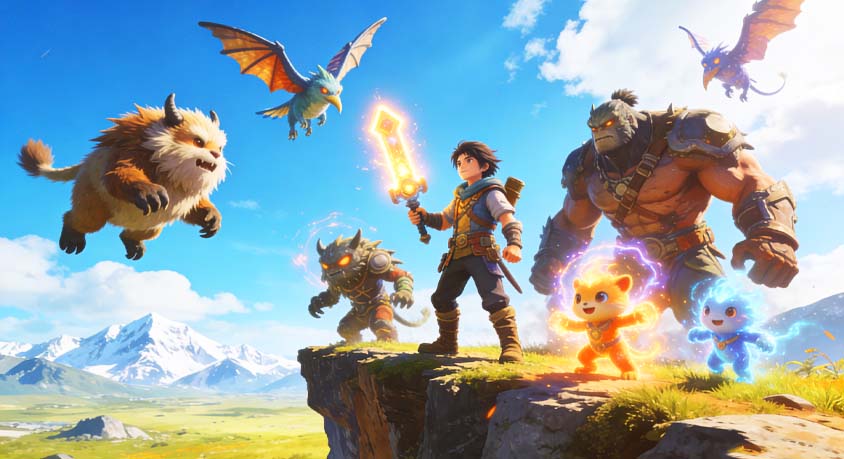
Caught in the crossfire is a genuinely fascinating design philosophy debate. Where exactly is the line between inspiration and plagiarism in a medium built on iteration? Does radically changing a concept's context—turning cute companions into factory assets—create enough distance? The purists scream about artistic integrity, while the players at the keyboard are too busy enjoying their fully automated ore farm staffed by depressed-looking mammals to care.
This isn't really a fight about legal briefs (leave that to the actual lawyers). It's a cultural shouting match about what we value. Is originality about a completely new idea, or is it about the clever recombination of old ones into something that feels fresh? Palworld, love it or loathe it, has become the perfect test case. It holds up a mirror to the industry and asks: if you "steal" from five different places, blend it into a smoothie that millions find delicious, and serve it with a side of guns, did you actually invent something new?
The real answer is probably messier than anyone wants to admit. It might just be that in 2026, "originality" looks less like a singular lightning bolt of genius and more like a wildly competent, slightly unhinged quilt. And whether that quilt is a masterpiece or a crime against fabric depends entirely on whether you're the one snuggled up in it, or the one who recognizes the stitches.

