

Let’s cut through the marketing fluff: Stardew Valley bills itself as a “relaxing escape from modern life”—a chance to trade spreadsheets for seed packets and Zoom calls for chicken coops. But ask anyone who’s lost three hours to perfecting their spring crop rotation, and they’ll tell you the truth: this game is a stealthy masterclass in resource optimization disguised as a pixelated picnic. You start with dreams of sipping lemonade while watching your turnips grow; you end up furiously calculating whether mining for iron or harvesting strawberries will net you more profit before the season ends. How did a game about farming become the ultimate “just one more minute” addiction? Because it turns adulting’s most stressful parts—planning, prioritizing, and panicking about deadlines—into something weirdly fun.
The magic (and the madness) lies in Stardew Valley’s constraints: your farmer has a finite amount of energy each day, and seasons tick by in 28-day bursts, with crops wilting and festivals arriving whether you’re ready or not. This isn’t a “do whatever you want” sandbox—it’s a puzzle where every action is a bet. Do you spend your morning watering crops (safe, but low reward) or trek to the mines (risky, but potentially lucrative ore)? Do you skip the Flower Dance to fix your broken fence (adulting move) or go to flirt with a villager (romance strategy)? Even “relaxing” activities like fishing aren’t safe—miss a bite, and you’ve wasted precious energy that could’ve gone to planting blueberries. Stardew Valley doesn’t just let you farm; it makes you strategize about farming, and suddenly, your virtual turnips feel as high-stakes as your real-world to-do list.
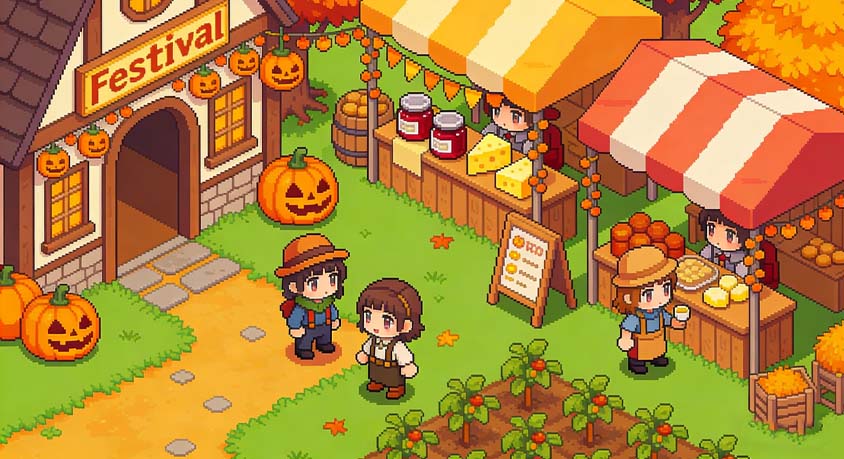
What’s genius is how it wraps this stress in a cozy blanket of nostalgia and charm. The pixel art is warm, the villagers are quirky (shoutout to Shane, the grumpy chicken lover who’s secretly a softie), and every small win—a perfect harvest, a new friendship level, an upgraded tool—feels like a victory lap. You’ll curse when a storm destroys your cornfield, then cheer when you unlock a sprinkler that lets you sleep in past 6 a.m. It’s the same dopamine hit as crossing items off a real to-do list, but without the existential dread of adulting. Stardew Valley doesn’t just simulate farming; it simulates the satisfaction of building something meaningful, one well-planned day at a time.
Critics might call it “just a farming game,” but that’s missing the point. Stardew Valley is a mirror held up to our obsession with productivity—except instead of grinding for a promotion, you’re grinding for a better barn. It asks: What if the “hustle” was fun? What if missing a deadline (or a crop harvest) just meant trying again tomorrow, no boss breathing down your neck? It’s no wonder players keep coming back, even years after release. In a world where rest is often guilt-inducing, Stardew Valley lets you be “productive” in a way that feels joyful—not stressful. You’re not slaving away; you’re building a life (virtual or otherwise) on your terms.
By the time you’ve upgraded your house, married your favorite villager, and filled your greenhouse with rare fruit, you’ll realize the game’s biggest trick: it’s not about escaping adulting. It’s about reimagining it—turning the chaos of planning and prioritizing into something that feels like play. So the next time you find yourself staying up till midnight to harvest pumpkins before fall ends, don’t feel guilty. You’re not just farming virtual crops—you’re mastering the art of enjoying the grind, one pixelated turnip at a time.

