

Modern games love to brag about their “innovations”—open worlds so big you need a fast travel button, cutscenes longer than a movie, and “choice-based” stories that boil down to picking A or B. But here’s the tea: most of the “new” ideas they’re flaunting were invented by Chrono Trigger back in 1995. This SNES masterpiece didn’t just make JRPGs cool—it planted seeds of design genius that modern indies are still harvesting today. How did a game with 16-bit graphics and a story about time-traveling teens become the unsung hero of indie game design? Because its core tricks—multiple endings, New Game+, and time-bending storytelling—are timeless, and indies are proving they’re more powerful than any $100 million budget.
Let’s start with multiple endings, a concept Chrono Trigger turned from a novelty into a cornerstone. Before it, most games gave you one ending—beat the boss, roll credits, done. Chrono Trigger? It let you wrap up the story at 13 different points, each shaped by your choices: save a character or let them die, ally with a villain or take them down, even fight the final boss at the start (good luck with that). It taught players their decisions mattered, not just for the plot, but for how the journey ended. Fast forward to today: indies like Sea of Stars and Undertale owe their replayability to this exact idea. Sea of Stars’ alternate endings hinge on who you befriend; Undertale’s “Pacifist” vs. “Genocide” routes are just Chrono Trigger’s choice-driven DNA with a quirky twist. These games don’t just copy the concept—they refine it, proving that multiple endings aren’t just a gimmick; they’re a way to make players feel invested in the story.
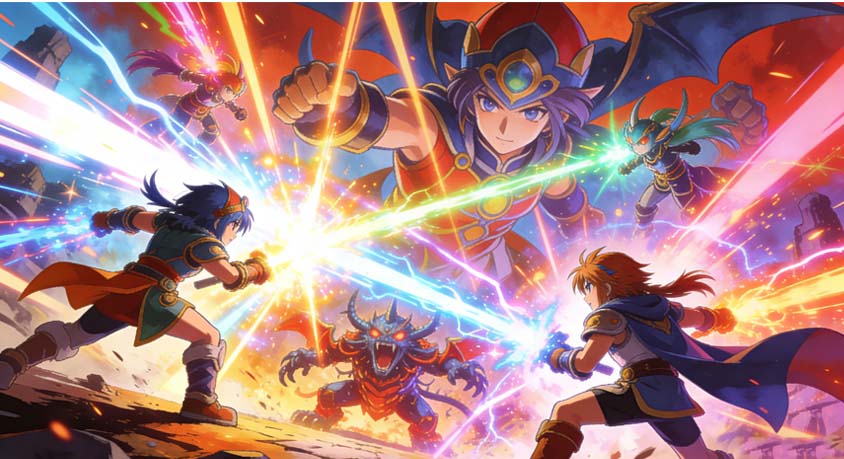
Then there’s New Game+, the feature that turned “beating the game” into “just the beginning.” Chrono Trigger lets you restart with all your levels, items, and abilities intact, unlocking new dialogue, secrets, and endings you missed the first time. It turned replay into a reward, not a chore. Now look at indies like Loop Hero and Hades: Loop Hero’s loops are just New Game+ with a roguelike coat of paint, letting you carry over progress while shaking up the map. Hades’ “escape attempts” are New Game+ on steroids, with each run revealing more story and power-ups. Chrono Trigger proved that players don’t mind repeating content—if it feels fresh and rewarding. Modern indies are just taking that lesson and running with it, turning repetition into a core part of the fun.
And let’s not forget the time-travel storytelling. Chrono Trigger didn’t just use time travel as a plot device—it wove it into the gameplay. You’d jump from the Stone Age to the Future, altering events in one era to fix problems in another. It was nonlinear, clever, and never confusing (looking at you, some modern time-travel games). Today, indies like 13 Sentinels: Aegis Rim and Death Stranding (okay, not quite indie, but indie-spirited) use similar ideas—13 Sentinels’ time-hopping narrative is a love letter to Chrono Trigger’s structure; Death Stranding’s “timefall” and alternate dimensions are just time travel with a sci-fi makeover. Chrono Trigger showed that time-bending doesn’t have to be a mess—it can be a way to tell deeper, more interconnected stories.
By the time you finish Sea of Stars or Loop Hero and think, “This feels familiar,” you’re feeling Chrono Trigger’s ghost. It didn’t just make a great game—it created a language of design that indies are still speaking. In a world where AAA games chase trends and forget what makes games fun, indies are going back to the classics, grabbing Chrono Trigger’s playbook, and proving that good design never goes out of style. It’s a reminder that innovation isn’t about reinventing the wheel—it’s about taking the wheel Chrono Trigger built and driving it into new, exciting places. And that’s why, 30 years later, Chrono Trigger is still the game that keeps on giving—one indie hit at a time.

