

The first light of dawn seeped through the shutters of my Florentine apartment, and I woke to the clink of espresso cups from the café below. I pulled on comfortable shoes—essential for Florence’s cobblestones—and wandered out, the air thick with the smell of warm cornetti (flaky Italian croissants) and jasmine from a nearby courtyard. The city felt like a secret, its narrow streets winding past terracotta-roofed palaces, laundry fluttering from windows, and street artists sketching portraits of passersby. By 9 a.m., I was standing in front of the Uffizi Gallery, its stone facade etched with the names of artists who’d shaped the world—and I could barely contain my excitement.
I’d booked my Uffizi ticket three months earlier (locals warn the line without reservations snakes around the block for hours) and skipped the queue, slipping into the cool, dimly lit halls. The first gallery hit me like a wave: Botticelli’s The Birth of Venus hung on the wall, larger and more luminous than any textbook could capture. I leaned in, my breath catching at the way her dress—painted in soft blues and pinks—seemed to float, as if the wind from the painting might brush my cheek. A docent paused nearby, pointing to Venus’s eyes. “Botticelli painted her with that gentle, almost curious look,” she said. “Like she’s just stepped into the world, and we’re lucky to be watching.” I stood there for 10 minutes, forgetting the crowds, just staring. This wasn’t art—it was a moment frozen in time, warm and alive.
I wandered through the galleries slowly, pausing at da Vinci’s Annunciation (the way he painted the light through the window felt like it was streaming into the room) and Raphael’s Portrait of Pope Leo X (his robe’s rich reds seemed to glow). By noon, my feet ached, so I ducked into Uffizi's rooftop café, ordering a caffè latte and a slice of ricotta cake. From the terrace, I looked out at Florence’s skyline—the Duomo’s red dome peeking over rooftops, the Arno River glinting in the sun—and smiled. Even the break felt like part of the art.
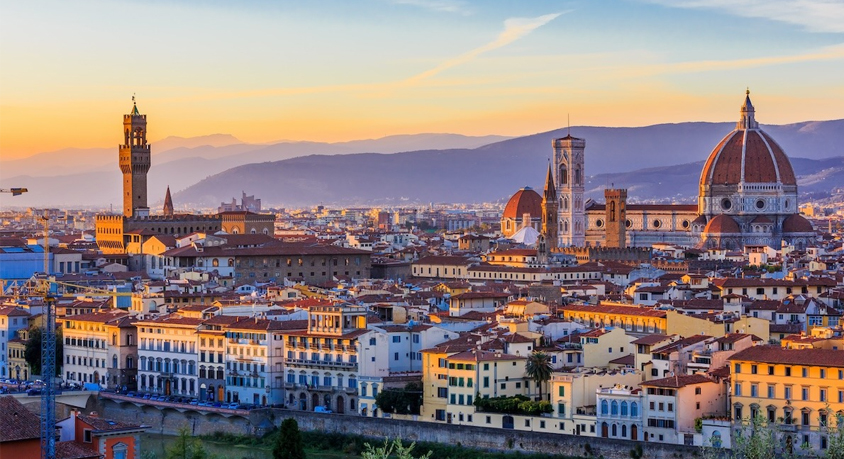
By late afternoon, I made my way to Michelangelo Square, perched on a hill overlooking the city. The path up was steep, lined with olive trees and vendors selling gelato (I grabbed a cone of pistachio—creamy, nutty, and sweet enough to make my teeth tingle). When I rounded the corner, the view took my breath away: Florence spread out below, its terracotta roofs turning gold as the sun dipped toward the hills. The Arno River snaked through the city, a silver ribbon, and the Duomo’s dome glowed like a polished ruby. I found a spot on the stone wall, unfolding my folding stool (a lifesaver for tired legs), and joined the crowd—couples holding hands, families pointing out landmarks, a group of friends laughing as they passed a bottle of Chianti.
As the sun set, the sky shifted from orange to pink to lavender, and the city lights began to twinkle. A street musician played the violin, his melody floating over the crowd, and I took a bite of gelato, letting the sweetness mix with the cool evening air. For a moment, everything felt perfect—no rush, no plans, just the beauty of a city that had inspired artists for centuries. A woman from Boston sat next to me, holding a sketchbook. “I came here 20 years ago with my mom,” she said, showing me a drawing of the sunset from 1999. “It looks the same. That’s the magic of Florence—it doesn’t change, not really.”
On my way back down the hill, I stopped at a tiny trattoria in the Oltrarno neighborhood, ordering ribollita—a hearty Tuscan bread soup, thick with cannellini beans and kale. The owner, Signora Maria, brought it out steaming, saying, “Eat slow—this is food for the soul.” She was right; every spoonful tasted like home, warm and comforting. I washed it down with a glass of local Chianti, and she told me stories of growing up in Florence, playing in the Uffizi’s gardens as a child.
Practical tips for anyone planning a trip: Book Uffizi tickets online at least 2-3 months in advance—peak season (April-June, September-October) sells out fast. Rent a wireless audio guide (the Uffizi’s official one is great, or use apps like Rick Steves) to avoid missing details about the art. Wear comfortable, non-slip shoes—Florence’s cobblestones are slippery, especially after rain. Head to Michelangelo Square by 5 p.m. (spring/fall) or 6 p.m. (summer) to get a good spot for sunset. And don’t skip the Oltrarno neighborhood—its small trattorias serve the best authentic Tuscan food, far from the tourist crowds.
As I walked back to my apartment that night, the streets were quiet, the only sounds being the distant clink of glasses and the rustle of leaves. I thought about Botticelli’s Venus, the golden sunset, and the taste of ribollita. Florence isn’t just a city of art—it’s a city that lives with art, breathing it into every cobblestone, every espresso, every sunset. I left with a sketchbook full of notes, a camera roll of sunsets, and a heart full of wonder. And I know I’ll be back—because some places don’t just stay with you. They become part of you.

