

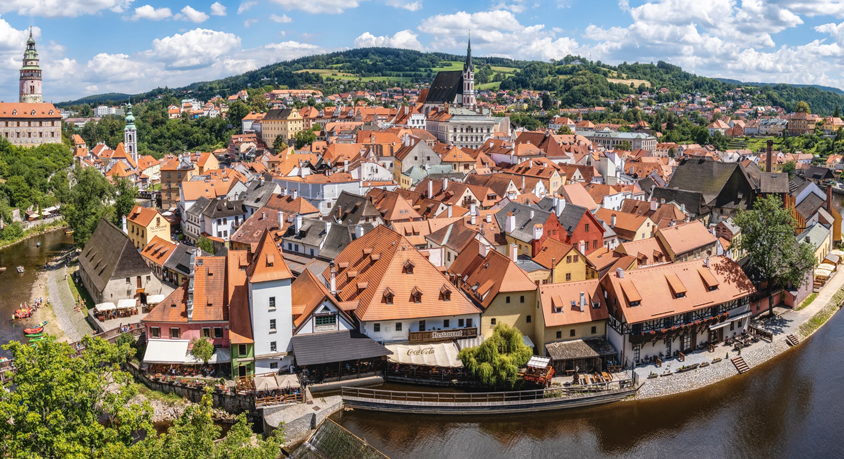
The train from Prague to Cesky Krumlov chugged through rolling Czech countryside—green fields dotted with wildflowers, red-roofed farmhouses, and forests that seemed to glow in the late-morning sun. By the time I stepped off the platform, I already felt lighter, like I’d left the bustle of the city behind. I grabbed my bag (with my cobblestone-friendly walking shoes tucked inside—thank goodness I’d packed them) and followed the signs to the town center, and within 10 minutes, I gasped: there it was, Cesky Krumlov, wrapped in a loop of the Vltava River, its red-tiled roofs cascading down hills, and the spires of its castle piercing the sky. It looked like a storybook illustration come to life—no filters needed.
My first stop was Cesky Krumlov Castle, the town’s crown jewel. I wandered up the winding stone path, pausing every few steps to snap photos of the castle’s turrets and the river below. The entrance was guarded by two stone bears (a symbol of the castle’s former rulers), their expressions fierce yet somehow welcoming. Inside, the castle’s courtyard felt like a step back in time—cobblestones worn smooth by centuries of footsteps, ivy climbing up stone walls, and a small fountain trickling in the center. I climbed the castle’s Great Tower, and when I reached the top, the view took my breath away: the entire town spread out below, the Vltava snaking around it like a silver ribbon, and distant hills covered in pine trees. A group of tourists from Canada stood beside me, and we laughed as we tried to spot our respective accommodations—theirs a tiny guesthouse with a blue door, mine an attic room with a dormer window that caught the sun. “It’s like we’re in a Disney movie,” one of them said, and I couldn’t agree more.
By midday, I wandered down to the Old Town Square, a cozy plaza lined with pastel-colored buildings—pinks, blues, and yellows—that housed cafes, souvenir shops, and a 17th-century plague column. I pulled up a chair at an outdoor café, ordering a cup of Czech coffee (strong, with a dollop of whipped cream) and a trdelník—a sweet, spiral pastry baked over an open flame, rolled in cinnamon and sugar. The first bite was warm and crispy, the sugar melting on my tongue, and I found myself eating it so fast I almost burned my fingers. The café owner, a woman named Eva with a thick Czech accent, laughed. “Slow down—there’s plenty to savor here,” she said, nodding at the square. I did, watching as a street musician played the accordion, children chased pigeons around the fountain, and an elderly couple sat hand-in-hand, sipping beer. It was quiet joy, the kind that makes you feel grateful to be alive.
After lunch, I rented a paddleboat on the Vltava River—Eva had recommended it, saying “the best way to see the castle is from the water.” She was right. As I glided along, the castle loomed above me, its walls reflecting in the river’s calm surface. I passed other boats: a family singing Czech folk songs, a group of friends sharing a bottle of local beer, and a solo traveler sketching the shoreline. The sun dipped lower, painting the sky in soft oranges and pinks, and I stopped paddling for a minute, just floating, listening to the water lap against the boat and the distant sound of the accordion from the square. It was one of those moments—quiet, perfect, and entirely unforgettable.
As evening fell, I wandered back to the square, stopping at a small restaurant for dinner. I ordered goulash—slow-cooked beef in a rich, spicy sauce, served with dumplings—and a glass of Czech pilsner. The food was hearty and warm, exactly what I needed after a day of walking. The waiter, a young man named Jan, told me about the town’s history: how it had been preserved for centuries, how locals still celebrated traditional festivals, and how even in winter, when the river froze, it was just as magical. “Come back in December,” he said. “We have a Christmas market in the square—hot wine, handmade toys, and the castle lit up with lights.” I made a mental note to add it to my list.
Practical tips for anyone planning a trip: Take the train from Prague—it’s a 2-hour ride, and the scenery alone is worth it. Visit between May and September for mild weather and longer days (though October is lovely too, with fall foliage painting the hills). Wear supportive walking shoes—Cesky Krumlov’s streets are cobblestone, and they get slippery after rain (pack a foldable umbrella just in case). Book accommodations early, especially in summer—small guesthouses fill up fast. And don’t rush: spend at least two days here. There’s no need to check off “attractions”—just wander, sip coffee, and let the town’s magic wrap around you.
As I walked back to my attic room that night, the town was quiet, except for the distant hoot of an owl and the soft glow of streetlights on cobblestones. I looked up at the castle, now lit by spotlights, and smiled. Cesky Krumlov isn’t just a “pretty town”—it’s a place that slows you down, makes you notice the little things, and reminds you that magic still exists in the world. I left with a pocket full of trdelník crumbs, a camera roll of sunsets, and a heart full of memories. And I know I’ll be back—because some fairy tales are too good to only visit once.

