

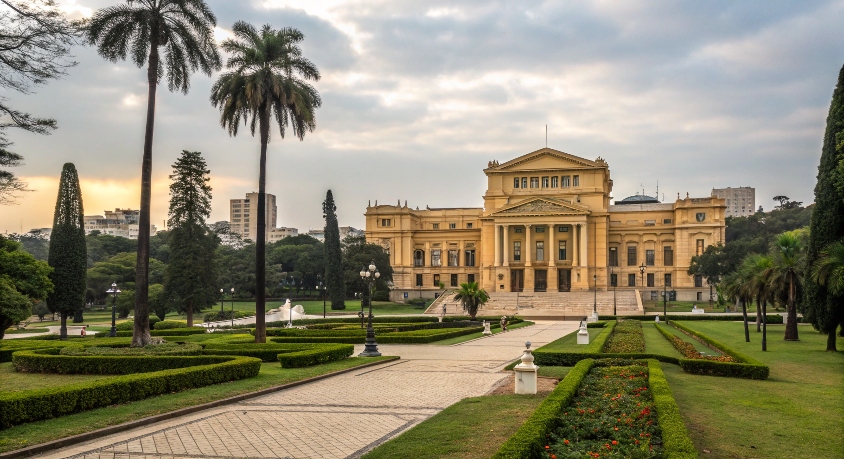
When I first arrived at the Museum of Ipiranga in São Paulo, I didn’t know what to expect. I had heard about the museum's historical significance, but walking through its doors felt like stepping back in time. The museum is located within the beautiful Ipiranga Park, which adds a peaceful touch to the whole experience. The museum itself used to be the royal palace for the Portuguese royal family before Brazil's independence. Today, it stands as a reminder of Brazil’s fight for freedom.
The museum’s architecture is impressive yet simple. Its grand design makes it clear that it was once a place of royalty, but the building feels welcoming and warm. Inside, I could see exhibits that told the story of Brazil’s journey to independence, from the time when the Portuguese royal family fled from Napoleon to the moment Brazil declared its freedom.
As I walked through the museum, I could feel the weight of history in every room. The museum is divided into several sections, each focusing on a different aspect of Brazil’s past. The first thing that caught my attention was the paintings. Some of the works depict famous moments in Brazilian history, like the escape of the royal family from Europe and the day when Brazil declared independence in 1822.
There was a large painting that showed the moment when Prince Pedro I cried out, “Independência ou Morte!” This cry is considered one of the most important moments in Brazil’s history. Seeing this painting made me feel connected to the emotions of that time. I could almost hear the shouts of the crowd and feel the excitement of the people as they celebrated their new freedom.
The museum also has many sculptures and everyday objects from the time of Brazil's independence. Some of these objects were used by the royal family, while others were part of the daily lives of the people living in Brazil at that time. I found it fascinating to see how people lived and what they valued during this important period in history.
While the paintings were impressive, the other artifacts in the museum also grabbed my attention. There were many old tools, pottery, and crafts that gave me a deeper understanding of life in Brazil during the 19th century. For example, the pottery was beautifully crafted, with bright colors and intricate designs. It was clear that people at that time took great care in creating everyday items, even if they didn’t have the luxury we enjoy today.
I also came across a collection of old tools used in agriculture. These tools played an important role in shaping Brazil’s economy during its transition from colonial rule to an independent nation. Looking at these simple, yet powerful tools, I felt a deep respect for the people who built the foundation of Brazil's independence.
After exploring the museum, I decided to take a walk around Ipiranga Park. The park itself is a lovely space, with tall trees and green grass. The air was fresh, and the atmosphere was calm. It felt like the perfect place to reflect on everything I had seen inside the museum.
One of the highlights of the park is the independence monument, which stands proudly in the center of the park. The monument marks the spot where Brazil’s independence was declared. Standing before it, I couldn’t help but think about the struggles and triumphs that led to Brazil becoming a free country.
I also noticed how well-kept the park was. It’s clear that the park and the museum are important places for the people of São Paulo. Many locals were walking around, enjoying the peaceful environment. I could see families spending time together, and I even saw children playing near the fountain. It was wonderful to see how the park and the museum are part of everyday life for the people here.
One thing that stood out to me during my visit was the museum’s commitment to accessibility. Despite being a developing country, Brazil has made efforts to ensure that everyone can enjoy its cultural and historical treasures. The museum is fully accessible to people with disabilities.
There are tactile paths for visitors who are visually impaired. I was impressed to see that the museum had signs in braille and that there were guides available in sign language. This made the experience much more inclusive, and it showed that Brazil cares about providing equal opportunities for all people to learn and appreciate its history.
In addition to these features, the museum’s design is also wheelchair-friendly, with ramps and spacious hallways that make it easy for people with mobility challenges to move around. I was happy to see that the museum is not just about sharing Brazil’s history with people who can physically visit, but it’s also about making sure that everyone, regardless of their abilities, can experience and enjoy the exhibits.
As I spent more time in the museum and the park, I realized that this experience was not just about learning history. It was about connecting with the people and the culture of Brazil. The museum and the park bring together visitors from all walks of life. I saw people of different ages and backgrounds, all coming together to learn about and celebrate Brazil’s independence.
Even though the Museum of Ipiranga may not have the same flashy displays as some of the European museums I’ve visited, it has something more valuable: a deep sense of history and a unique charm. The museum's simple yet elegant design, combined with the rich history it holds, makes it a special place to visit.
I left the museum feeling that I had gained a greater understanding of Brazil’s past, and I was grateful to have had the opportunity to explore it in such an immersive way. The Museum of Ipiranga is a place that celebrates both Brazil’s history and its people, and it’s a reminder that history is not just about the past; it’s about the people who continue to shape it today.

